
Quartz countertops vs granite often sparks debate among architects and homeowners aiming for the perfect blend of durability and style. You face critical choices about maintenance, heat resistance, and design flexibility that shape your project’s success. This guide breaks down the key performance differences and introduces STONIM™ solid surfaces—a hygienic, repairable, and seamless alternative designed to meet demanding specifications. Keep reading to specify with confidence and elevate your next project. For more insights, check out this comparison article.
Performance Comparison
When choosing between quartz and granite, understanding performance is crucial. Let’s dive into durability and maintenance differences to help you make informed decisions.
Countertop Durability Factors
Both quartz and granite are popular for their strength, but they differ in composition. Granite is a natural stone, while quartz is engineered. This makes quartz more uniform and predictable in performance, as it doesn’t have the natural fissures found in granite. Granite’s uniqueness can be a double-edged sword, offering beauty but also inconsistency.
For high-traffic areas, quartz shines with its consistent quality. It’s less likely to chip or crack, providing reliable durability. Granite, while strong, may require a bit more care due to its natural variations. If consistency and predictability are priorities, quartz might be the better choice.
Stain, Heat, and Scratch Resistance
Stain resistance varies significantly between these materials. Quartz countertops, being non-porous, offer superior stain resistance. This feature prevents liquids from seeping in, reducing the risk of permanent stains. Granite, in contrast, needs sealing to maintain its resistance. Without it, stains can penetrate the surface over time.
Heat and scratch resistance also differ. Granite can handle heat better due to its natural formation process. Placing hot pans directly on quartz might damage it, as it’s not as heat-resistant. For scratch resistance, both materials perform well, but quartz has an edge due to its engineered hardness. If you prioritize stain resistance, quartz is a clear winner.
Low Maintenance and Longevity
Maintenance is a key consideration for any countertop. Quartz surfaces require minimal upkeep, as they don’t need sealing and are easy to clean. This makes them ideal for busy kitchens or commercial spaces where time is precious. Granite, while beautiful, requires regular sealing to maintain its appearance and functionality.
In terms of longevity, both materials are durable, but quartz’s low maintenance nature can enhance its lifespan. Less effort in upkeep translates to years of worry-free use. For those seeking long-term value with minimal hassle, quartz is an attractive option.
Design and Aesthetics
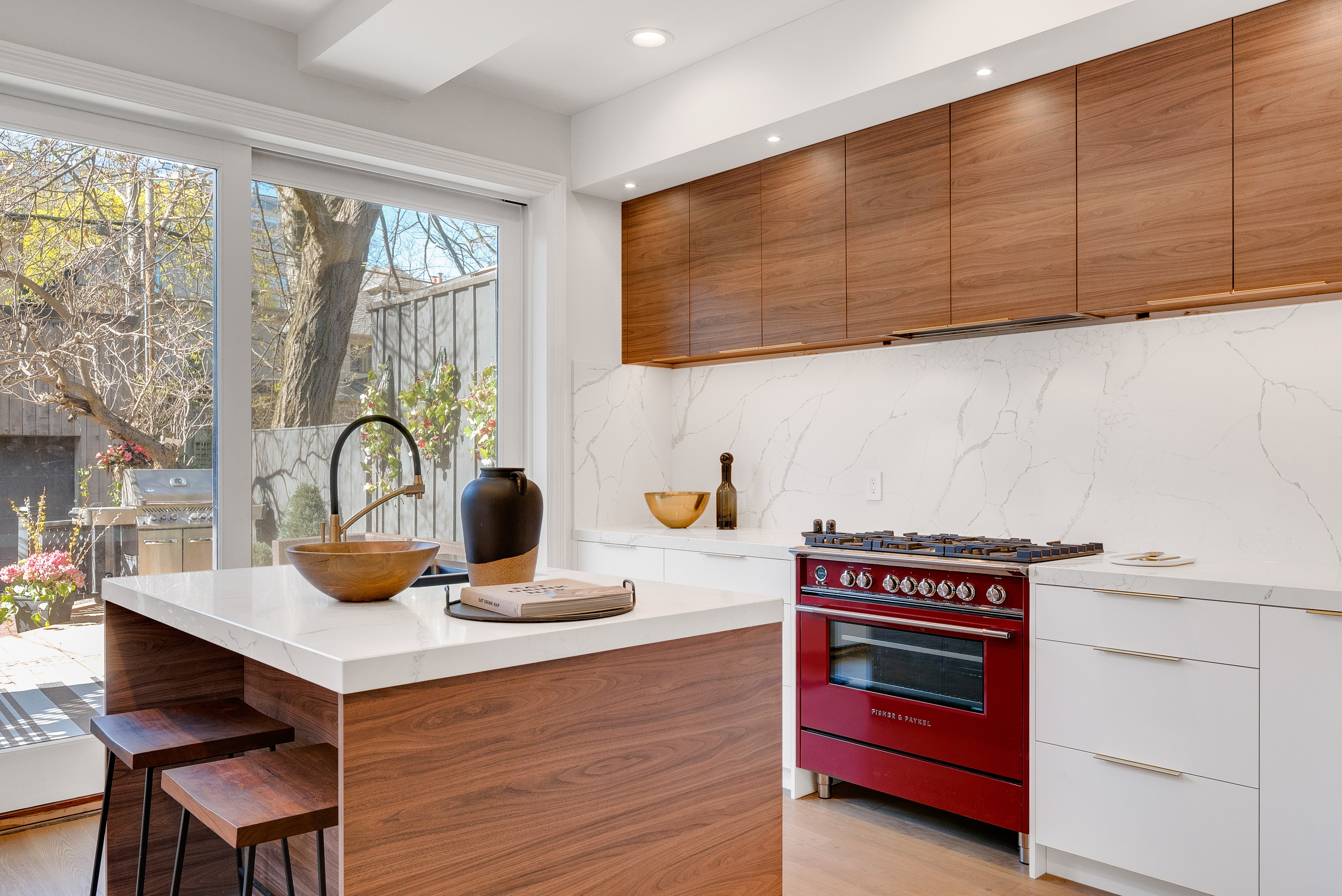
Design flexibility often influences countertop choices. Here, we’ll explore how quartz and granite measure up in terms of style and customization.
Seamless and Thermoformed Designs
Quartz offers a seamless look, ideal for modern aesthetics. Its engineered nature allows for smoother joins and a more cohesive appearance. Granite, with its natural beauty, may show seams more prominently. For those desiring a sleek, uninterrupted look, quartz is the way to go.
Thermoforming is another advantage of quartz. This technique allows for curved edges and custom shapes, perfect for unique design projects. Granite, being natural, is less adaptable to such customization. If creative freedom is your goal, quartz offers more possibilities.
Customization and Color Options
Color choice is a personal aspect of design. Quartz provides a wide range of colors and patterns due to its engineered nature. It’s consistent, allowing for precise color matching. Granite offers unique patterns, but consistency across large projects can be challenging due to its natural variations.
For those who prioritize uniformity and specific color schemes, quartz is the preferred choice. Its ability to be tailored to exact design visions makes it a favorite among architects and designers seeking specific aesthetics.
Hygienic and Sustainable Choices
Quartz stands out in hygiene and sustainability. Its non-porous surface resists bacteria growth, making it ideal for kitchens and healthcare environments. Granite, while natural, can harbor bacteria if not sealed regularly. This makes quartz a safer choice for hygiene-critical spaces.
Sustainability is another consideration. Quartz surfaces, like those from STONIM™, are produced with eco-friendly processes, aligning with modern sustainability demands. If environmental impact is a concern, quartz offers a more responsible option.
Frequently Asked Questions
1. Which is cheaper, quartz or granite?
Quartz and granite are generally comparable in price, but specific costs can vary based on color, finish, and supplier. Granite can sometimes be more expensive due to its natural beauty and uniqueness.
2. Can quartz countertops withstand heat?
While quartz is durable, it’s less heat-resistant than granite. Hot pans should not be placed directly on quartz surfaces to avoid damage. Using trivets or heat pads is recommended.
3. How often do granite countertops need to be sealed?
Granite countertops typically need sealing annually to maintain their stain resistance and appearance. The frequency can vary based on usage and the type of sealant used.
4. Are quartz countertops eco-friendly?
Yes, many quartz countertops are produced with sustainability in mind. Brands like STONIM™ focus on eco-friendly manufacturing processes, reducing environmental impact while providing durable surfaces.
5. Do quartz countertops scratch easily?
Quartz is highly scratch-resistant due to its engineered hardness. However, it’s always best to use cutting boards to maintain the surface’s pristine appearance over time.